
Four Things We Build.
We build the software established operational businesses run on, integrate it with the systems they keep, and apply AI inside it where that genuinely helps. Everything below is scoped against your operation and owned by you when it ships.
Most Operations Did Not Choose Their Software.
They accumulated it. Whichever of the four below you start with, this is usually the picture we are working from.

Five systems → one
Kilt Contracting · live in production
A general contractor across Edmonton and Calgary moved off spreadsheets, texts and memory onto one operations platform built around how they actually run projects. Client-reported.
See it01
Operational Software
The business problem
The state of the business lives in five systems and one person's head. Job status is in the scheduler, history is in the inbox, approvals happened on the phone, and the number management reads is a spreadsheet somebody rebuilds each month. It holds together until the business outgrows the person holding it.
Example workflows
- Jobs and work orders — one record carrying scope, schedule, crew, site and status
- Customer and account records, with history and paperwork in one place
- Approvals captured in writing before the work proceeds
- Documents attached to the job that produced them
- Live management visibility instead of a monthly reconstruction
- Roles and permissions so office, field and management each see their own view
The intended outcome
The state of the business is answerable without a phone call — what is open, what is stalled, what was approved and by whom, and what the month looks like while there is still time to change it.
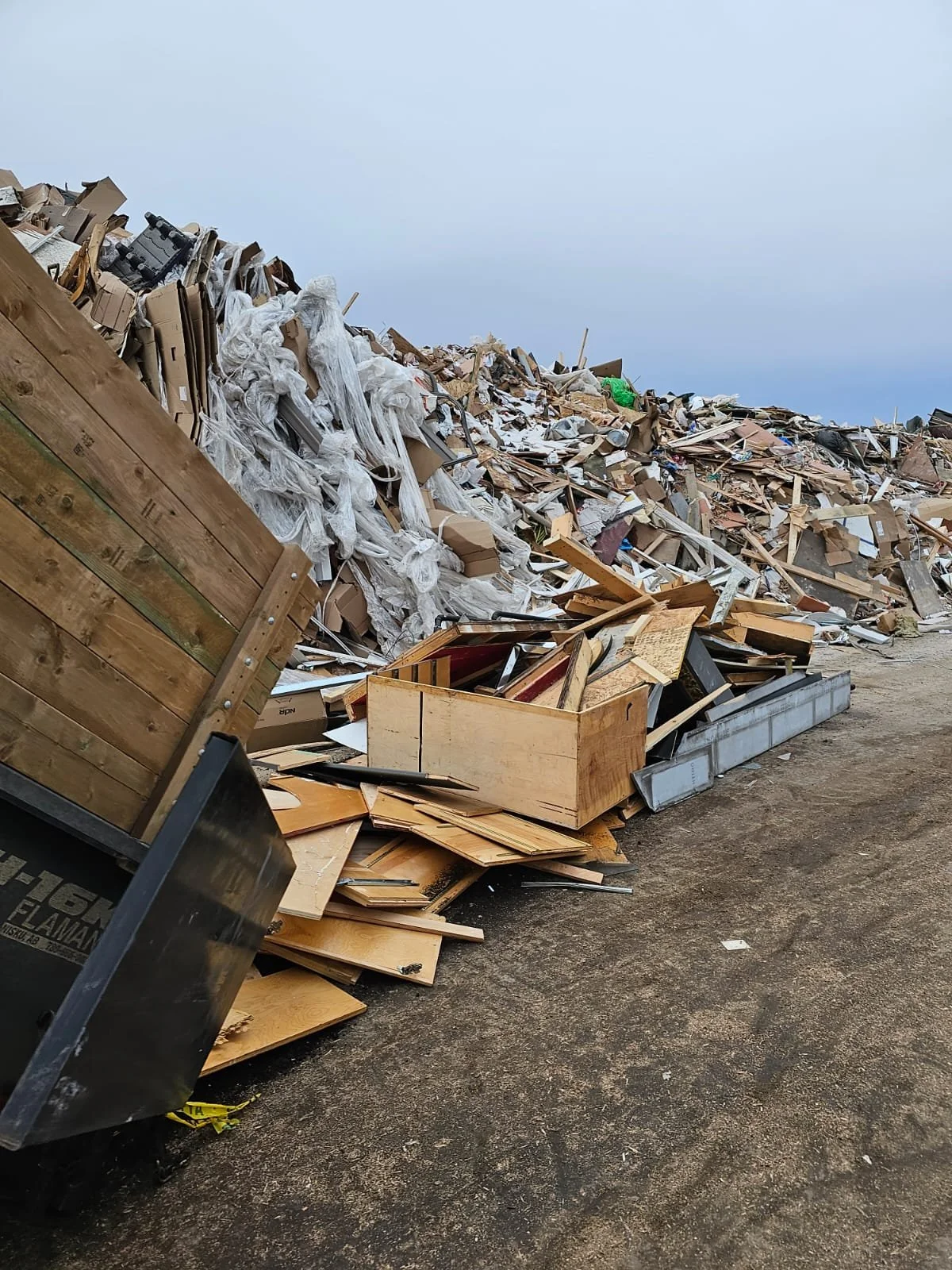
2–3 hrs → minutes
Demolition contractor · live in production
Bid assembly that took two to three hours per submission now runs in minutes, with a go or no-go read available in under a minute. Client-reported.
See it02
Quoting & Document Workflows
The business problem
Pricing work depends on judgement held by one or two people and a spreadsheet only they fully trust. Quoting capacity is capped by their availability, two similar jobs get priced differently, and when a number is questioned six months later nobody can reconstruct how it was reached.
Example workflows
- Structured estimating against your own rate card
- Proposals and quote documents generated from the priced scope
- Pricing inputs — materials, labour, equipment, subcontract, margin
- Review and approval before anything reaches the client
- Extraction of the details buried in incoming tender and spec documents
- A recoverable record of how each price was arrived at
The intended outcome
Quotes go out consistently regardless of who prepared them, estimator hours go to the work worth winning, and the basis of any price can be reconstructed long after the job closed.

52 platforms
Integrations catalogue · capability
The platforms we build against across accounting, CRM, field service, payments and messaging. A catalogue entry means we build against that platform — not a partnership, a certification, or a finished connector on a shelf.
See it03
Systems Integration
The business problem
When two systems do not talk, a person becomes the integration — exporting, re-keying, reconciling and catching the mistakes. That work scales with volume, produces no new information, and stops entirely when that person is away.
Example workflows
- Accounting handoffs — invoices, payments, customers and job costs
- CRM and sales data flowing into the systems that deliver the work
- Field systems connected to the office record
- Retries and idempotent writes so outages recover instead of dropping data
- Failure visibility — a broken handoff raises itself the day it breaks
- Field-level decisions about which system is authoritative
The intended outcome
A record entered once is correct everywhere it is needed, the monthly reconciliation stops being a task, and nobody's job is being the bridge between two products.

Inside the software
How we scope it
We treat AI as a capability within an operational system, not as the starting point for a project. If a workflow does not need it, we will say so and build the system without it.
See it04
Applied AI & Automation
The business problem
Most AI spending starts with the technology and goes looking for a use. That produces demos rather than systems. The useful version is narrower: specific, repetitive work inside software people already use, where the input is known and being wrong has a bounded cost.
Example workflows
- Extraction — pulling structured detail out of documents and email
- Drafting — first-pass quotes, summaries and replies a person then approves
- Knowledge retrieval — answers from your own documents, with the source shown
- Bounded actions — narrow, reversible steps with a human in the loop where it matters
- Routing and triage of incoming work
- Human review wherever the cost of being wrong is real
The intended outcome
AI does the part of the job that is genuinely repetitive, inside the system people already work in, and a person stays accountable for anything that reaches a customer or a ledger.
The Rest of the Bench.
Real engagements that sit alongside the four categories above rather than inside them. Most clients arrive through one of the four and pick these up later, if at all.
Fractional AI Department
An ongoing engagement with a named lead and a live roadmap, for businesses that want continuous capacity rather than a single build.
ReadAI Consulting
Where the question is what to do rather than what to build: assessing workflows, sequencing the work, and saying plainly where software is not the answer.
ReadTraining & Enablement
Getting a team genuinely using what was built, plus practical AI training for people who need to work with these tools day to day.
ReadReporting & Analytics
Turning the data an operational system produces into the reporting management actually reads, rather than another export to reconcile.
ReadField Data Capture
Getting what happens on site into the system as it happens — tickets, quantities, photos, signatures and daily logs — so the office is not rebuilding the day from memory.
ReadCompliance & Document Control
Certificates, inspection records, safety documents and client prequalification held against the job and the crew, so a required package is produced rather than assembled under pressure.
ReadCustom CRM Builds
Where the operational system is primarily about customers and pipeline rather than jobs and crews.
ReadStart here
Bring Us the WorkflowThat Keeps Breaking.
30 minutes. We map how the work moves today, determine whether the problem justifies custom software at all, and hand you a scoped first phase — including an honest read on whether we are the right firm for it.
Edmonton, Alberta · No commitment · 587-937-6948